
You’re walking down High Street, coffee steaming, headphones off because you’ll want to hear this — warehouses humming, whiteboards marked in neon, founders swapping lawyer jokes by the taco truck. I’ll point out the coworking nooks, the university labs where prototypes smell faintly of solder and optimism, and the meetup where someone’s pitching a moonshot with pizza grease on their sleeve. Stick around — I’ll show you where real momentum hides.
The Rise of Columbus as a Tech Hub

When I first wandered into Columbus, I thought “midwestern calm” — until a startup pinged my phone and a drone buzzed past a coffee shop window; suddenly the city felt like someone had flipped a neon sign that said, “We’re open for clever things.”
You’ll notice it, too: rows of bike lanes humming with engineers late for stand-ups, renovated warehouses that smell faintly of roasted beans and solder, and campus-like research centers where ideas get prototyped before lunch.
You’ll feel the tech ecosystem push and pull, the innovation culture that makes you grin. The startup landscape pulses with entrepreneurial spirit, digital transformation projects, funding opportunities, mentorship programs, networking events, creative collaboration, and deep community engagement.
You’ll join in, reluctantly cool, and thrive.
Neighborhoods Driving Startup Growth
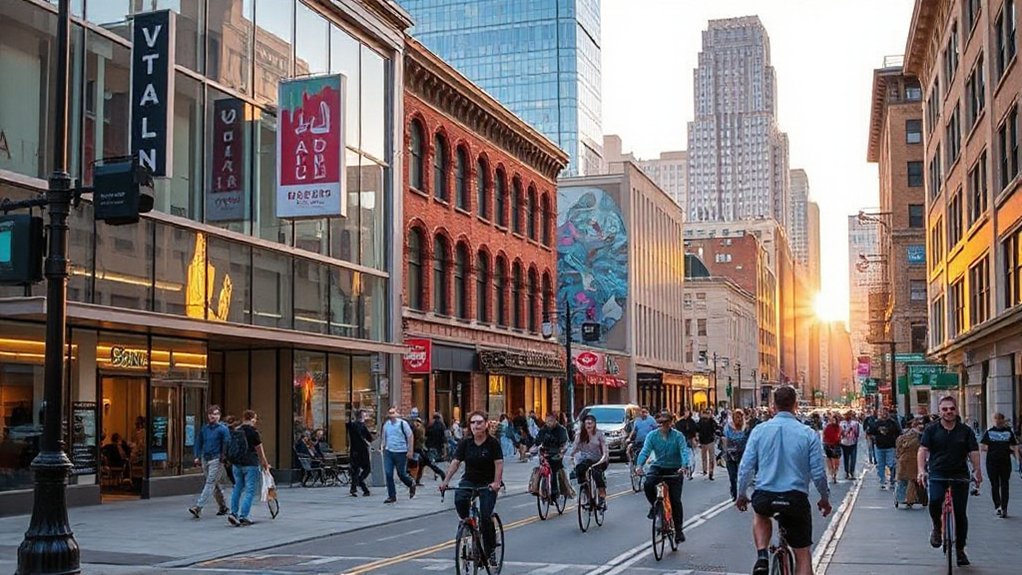
Five neighborhoods, maybe more if you count the ones that change names every other Tuesday, quietly power Columbus’s startup engine.
You stroll past murals, hear coffee grinders, and feel idea-fueled nervous energy. I point out spots where community engagement sparks late-night brainstorms, where you trade business cards and bad jokes, and where entrepreneurial mentorship happens over greasy burgers at 2 a.m.
- Short walks to founders’ meetups, where someone always knows a mentor.
- Pocket parks turned pop-up demo stages, bright lights, loud feedback.
- Corner cafes with whiteboards, bad coffee, brilliant pivots.
You’ll find grit, bright signs, and neighbors who’ll critique your pitch then cheer at your launch.
Stick around, listen, and you’ll learn faster than you think.
Coworking Spaces and Repurposed Warehouses

You’ll walk into a coworking loft and smell fresh coffee, hear keyboard clacks, and feel the buzz of flexible workstations that bend to your schedule.
I’ll point out how old warehouses got a glow-up — exposed brick, sunlit skylights, and modular desks that turn freight rooms into brainstorming arenas.
Trust me, you’ll want to pull up a chair, plug in, and see how adaptive conversions make startup life both gritty and gloriously practical.
Flexible Work Environments
If you’ve ever wandered into a sunlight-drenched loft and felt suddenly more productive than you did at your kitchen table, you’re not imagining it—I’ve been there too, coffee in hand, shoes under a communal table, grinning like a convert.
You walk in, you breathe reclaimed wood and printer ink, and you know your day will bend differently. You’ll join quick standups, toggle remote collaboration tools, and carve hours around family, thanks to flexible schedules.
I’ll nudge you: try the window seat, it’s a mood lifter. These spaces are social labs, not cubicle farms.
- Hot desks for pop-up focus and quick meetings
- Quiet pods for deep work and video calls
- Community events that spark real connections
Adaptive Warehouse Conversions
When an old factory breathes again, it’s loud in the best way—high ceilings yawn, sunlight slants through dust motes, and you can almost hear the ghosts of conveyor belts cheering us on;
I’ve wandered into converted warehouses that feel like secret clubs for people who love good lighting and bad puns. You step in, you breathe the concrete and coffee, you bump elbows with a coder and a ceramicist.
These spaces champion adaptive reuse, they stitch new life into old bones, keep grit and character, save resources, and wink at waste.
You’ll find flexible desks, nooks for calls, big communal tables, plants that actually thrive. It’s sustainable design with swagger, practical, cozy, and oddly inspiring — come see, you’ll stay.
University Research Labs and Industry Partnerships
Because Columbus’ university labs feel less like quiet halls and more like buzzing workshops, I love dragging you into them—the hum of freezers, the sharp tang of solder, the glow of monitor screens at 2 a.m.
You’ll see grad students trade jokes, professors sketch crazy diagrams, and company reps shake hands without paperwork yet. Collaborative research isn’t just jargon here, it’s a late-night pact over pizza, and technology transfer means inventions actually escape notebooks and hit the street.
- You’ll watch prototypes clank to life, smell coffee, cheer a tiny success.
- You’ll sit in on pitchy meetings where industry folks ask blunt questions.
- You’ll tour shared facilities, spot signage of startups born from lab benches.
Come curious, leave wired.
Venture Capital and Local Funding Ecosystem
Step into the room where money meets madness, and you’ll see Columbus’s funding world in full color — bankers in hoodies, angels mid-gesture, VCs squinting at slide decks like they’re cryptic maps.
You stroll past seed funding conversations, overhear angel investors swapping war stories, and feel the buzz of crowdfunding platforms pinging like slot machines.
I point you toward venture networks and startup accelerators that grease the gears, where pitch competitions clang like bell tests, and funding strategies get sharp, sweaty, real.
You learn investor relations, practice financial literacy, and nod when someone drops investment trends, because you want to speak their language.
I joke, I guide, I prod—hands-on, honest—so you leave knowing who to call, and how to sell your spark.
Talent Pipeline: Universities, Bootcamps, and Remote Workers
You’re standing in a campus quad, I’m nursing bad coffee, and we’re watching students sprint between lab buildings and startup meetups—those university-industry pathways are the lifeblood of Columbus innovation.
You’ll see bootcamp grads, headphones on, proving they can ship product fast, and you’ll hear recruiters say, “Send more,” because bootcamp-to-hire pipelines actually work.
And don’t forget remote talent—hire someone in flip-flops across state lines, set up a clear onboarding ritual, and you’ll get fresh perspectives without the parking headache.
University-Industry Pathways
If we want a steady stream of sharp, job-ready talent, we can’t just hope they wander in — we build the pathways ourselves, brick by bootcamp and mortar by university partnership.
You’ll feel the hum when curriculum alignment meets industry insights, when internship opportunities turn into hires, and when collaborative projects smell like coffee and late-night breakthroughs.
You watch faculty engagement spark student entrepreneurship, and research commercialization slip from lab notebook to product demo.
- Pair mentorship programs with innovation challenges to sharpen skill development.
- Host industry panels that hand students real-world perspective, quick wins, and network maps.
- Seed collaborative projects that place you in the room where ideas become startups, fast, messy, joyful.
Bootcamp-To-Hire Pipelines
When universities, bootcamps, and remote teams actually talk to one another, magic happens — and no, not the vague kind you see in brochures; the caffeinated, deadline-driven kind that smells like instant coffee and late-night Slack threads.
I’ve watched you scout talent at demo days, haggle curriculum tweaks with instructors, and sneak into cohort wrap-ups like a proud, slightly awkward aunt. You’ll build bootcamp partnerships that shorten timelines, give candidates real projects, and reveal who can actually ship.
I’ll push you to tighten hiring processes, standardize take-home tasks, and schedule fast, kind interviews that respect folks’ time.
Picture busy rooms, code on whiteboards, and celebratory pizza after an offer — messy, human, and efficient, just how we like it.
Remote Talent Integration
Some people think remote hiring is just posting a job and waiting for the inbox to explode — wrong, and messy as a microwave ramen disaster.
You need systems, scent of fresh coffee on video calls, and rituals that glue people together. I’ll walk you through real steps, no fluff, just grit and charm.
- Build remote team building rituals: weekly standups, virtual coffee walks, and micro-celebrations that smell like victory.
- Tap universities and bootcamps: host hack nights, skill demos, and paid internships that turn curiosity into code.
- Optimize digital collaboration: shared whiteboards, async docs, clear feedback loops, and timezone-friendly sprints.
You’ll recruit smarter, keep culture intact, and turn distance into an advantage, not an excuse.
Success Stories: Homegrown Startups Scaling Up
Because Columbus is quietly stubborn about doing things its own way, you’re about to meet founders who turned stubbornness into rocket fuel.
I walk you through bright lofts and cluttered garages, smell of coffee and solder, and you see homegrown successes stacking startup milestones like trophies.
You’ll hear a founder laugh, “We broke it twice, then sold it,” and you’ll feel the giddy thump of a first big contract.
You touch prototype plastic, taste celebratory pizza, watch a pitch replay on a laptop, and sense the room shift when hire number ten joins.
These stories aren’t glossy press releases, they’re messy wins, late-night code, and stubborn joy.
You leave wanting to start something, or at least cheer loudly.
City Support, Policy, and Infrastructure for Innovation
If the city were a person, it’d be the friend who knows exactly where the best coffee is and also keeps a spare wrench in the glove box — pragmatic, a little stubborn, and annoyingly helpful.
You stroll downtown, I point out city halls that push policy frameworks, you taste a roasted bean, I mention innovation incentives that nudge your prototype to market.
You hear construction, feel new fiber hum beneath your feet; that’s infrastructure investment making things faster.
We duck into a bright startup incubator, someone jokes, you meet mentors.
Tech regulations get trimmed where they choke growth, and economic development offices high-five wins.
It’s messy, human, effective — the city scaffolds your hustle, then watches you fly.
- startup incubators
- innovation incentives & policy frameworks
- infrastructure investment, tech regulations, economic development
How to Get Involved: Events, Meetups, and Resources
While you’re sipping whatever’s keeping you awake, I’ll tell you where the action is — loud, low-lit meetups, sunlit demo days, and that one awkward networking picnic where everyone politely steals each other’s pens.
I show up, you show up, we trade business cards like tiny flags. Check meetup calendars, community boards, and coworking spaces for weekly tech talks. You’ll hear live pitches, taste cold brew, and fumble small talk, it’s fine.
Volunteer at demo days to meet founders up close, join Slack groups for real-time networking opportunities, RSVP to hackathons for hands-on skill growth.
Want community involvement? Mentor, teach a workshop, or host a table. Get involved, bring snacks, ask awkward questions — people notice.
Conclusion
You’ve seen the warehouses buzzing, smelled fresh coffee in coworking nooks, heard lab printers whir—now step in. I’ll confess, I fell for Columbus hard; you might too. Walk a block, meet a founder, join a meetup, plant a seed. The city’s cheery grit flips failure into fuel, and funding’s closer than it seems. So go—network loud, build messy, laugh at setbacks—and watch this place turn your idea into motion.